
Lok Okhna Suttantaprija Ind
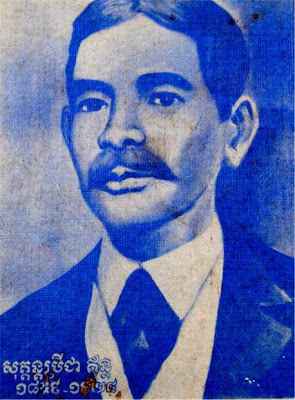
Born: July 22, 1859
Died:November 8, 1924
He was a Cambodian monk, writer and poet. HIs royal title, Okhna or Lord in English, was given to him by the King of Cambodia due to his works in helping preseve the Khmer Literature, his writing and his poetry skill.
He wrote the Katilok series, Nirasnatavat, Hombang back, Bakthom Sompoth, Loknitbakor, Sopearseth Chbap Srey, and many others. HIs works reflect the Khmer culture and life during Lok Prash Yakatha Choun Gnogn’s time. His countrymen respected him for his contributions to the society. Before there were any books published in Battambang province, people borrowed his books and hand copied. They circulated the hand copied books form one to another to read and study. Some people also memorized his poems for the whole books by heart.
Preah Botumthera Som
Born: 1852
Died: 1932
He is also known as Venerable Botumthera Som, Brah Padumatthera in French manuscripts, or often simply as Som . He is considered one of the best writers in the Khmer Language.
In 1867, Botumthera Som was ordained as a novice monk at the Wat Kamprau temple. During his monastic life he learned to read and write, but he disrobed in order to help at the family farm after only two years as a novice monk.
In 1873, Botumthera Som became a monk again at Wat Kamprau and continued his studies. During that time he made great progress, learning how to compose poetry on his own and writing it using the traditional method, on palymra palm leaves. As years went by, he was named the abbot of the temple.
In 1911 Som wrote the novel Dik ram phka ram (The Dancing Water and the Dancing Flower).
In September 1915, at the age of sixty-three, Botumthera Som completed his best-known work, the palm leaf manuscript of Tum Teav. His version of Tum Teav contains 1050 stanzas, including a 39-stanza preface in which Venerable Som gives the manuscript’s date of composition and identifies himself as the author.
Tum Teav is a classic tragic love story of the Cambodian literature set in Kampong Cham, Botumthera Som’s village, Kamprau, is on the border of the former district Tbong Khmom where Tum Teav takes place.
Botumthera Som died in 1932 when he was 80 years old.
Khun Srun
Born: October 3, 1945
Died: December 1978
Khun Srun was a well-known Cambodian writer. He was born into a poor Chinese Cambodian family. He was a brilliant student when he was studying Khmer literature and psychology at the university of Phnom Peng. He widely read sciences, mathematics and European literature. Amid the national turmoil in the 1960s, he worked as a professor of mathematics and a journalist while writing fiction and poetry.
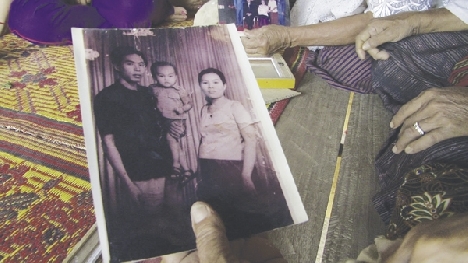
The only image of Khun Surun and his family. From events.barkley.edu
In less than four years, he published three collections of poems, short tales, and philosophical anecdotes; two collections of autobiographical short stories, The Last Residence and The Accused; and a final volume of poems, For A Woman.
His other writings and books include the following:
- គណិតសាស្ត្រថ្នាក់ទី៣-៤-៥-៦-៧-៨ (Textbook of Mathematics, third-form to eighth-form classes), under the direction of Uy Vanthon, 1970.
- គំហើញទី១ (My Views 1), 1970.
- គំហើញទី២ (My Views 2), 1970.
- គំហើញទី៣ (My Views 3), 1970.
- ជំទង់អំពីចំណេះដឹង (About Knowledge – For Young People), 1971.
- សំរស់ជីវិត (The Beauty of Life), 1971 (republished in 1994).
- ជំទង់អំពីស្នេហា (About Love – For Young People), with Peng Soeung (ប៉ែងសឿង), 1971 (Second Edition, 1973).
- កាព្យសាស្រ្តខ្មែរ (Khmer Poetics), written by Ing Yeng (អឹុងយ៉េង), corrected (ពិនិត្យសំរួល) by Khun Srun, 1972.
- ហ្សង់ប៉ូលសាត្រ និងអាល់ប៊ែរកាមិស (About Jean Paul Sartre and Albert Camus), 1972.
- លំនៅចុងក្រោយ (The Last Residence), 1972. This book is composed of five short stories.
“Srun might have written the first story, ផ្លេកបន្ទោរមួយ (A Flash of Lightning), after reading the short story “Erostratus” from Sartre’s book, The Wall. When the narrator, a prisoner, takes a shower on the roof of the police station, he suddenly has the delusion that he wants to kill a woman who happens to be there, just as the hero in “Erostratus” while standing on top of a high building decides to kill someone. The second story, ភេទដែលគេជិន (A Disgusted Nature), deals with the confession of a lady teacher who is distrustful of men. One can draw some comparisons with characters from classical stories such as Kakey, Tum Teav, and Reamker. The lady teacher asserts that men have always exploited women, marriage does not bring women happiness and women have a right not to bear a child. The story raises gender issues that are the same today. In ផ្ទះអន្ទិតសុក (Sok’s Home), the hero, Sok, leaves his home village and goes to Phnom Penh where he wanders from house to house as a servant. He sees that a rich family who used to live in an elegant home had come on hard times and finally found a place to live in peace in the simple home of a married couple. សាលាខ្ញុំ (My School) and គ្រូភឿន (Mr. Phoeun, a teacher) describe the sweet memories of Srun’s schooldays.” (Tomoko Okada, Tokyo University of Foreign Studies)
- ជនជាប់ចោទ (The Accused), 1973 (written after being jailed for the first time by the Lon Nol regime, from 1 February to 6 September 1971) : 1. សំរែកអ្នកសរសេរ 2.ជីវិតជាប់ចោទ 3.ខ្ញុំមិនទាន់យល់ 4.ជនជាប់ចោទ
“Khun’s last novel, The Accused, published in 1973, is narrated by a writer imprisoned by Cambodia’s military government. The accused asserts that he is not a person of politics or even a man of conviction, simply an observer and a writer. He, a lover of literature, wants to flee the country and be part of the wider world; yet he wants, also, to have the courage to risk his life for his principles. Shortly after The Accused was published, Khun left Phnom Penh and joined the Khmer Rouge.” (Madeleine Thien, Brick Magazine)
- ចិត្តសាស្ដ្រសំរាប់គ្រប់គ្នា (Psychology For All, 1973, unpublished?)
- ជូននារីម្នាក់ (For a Woman, 1973, unpublished?)
 LitLover