

Persecutions. Executions.
Cambodian writers experienced these tragedies during the Khmer Rouge between 1975 and 1979. All people including the intellectuals evacuated the city during the regime and walked to labor camps in the countryside to work and starve. The entire population had to leave all their former titles and abilities behind since their knowledge could get them killed– even their wearing of eyeglasses put them in line to die! This horror echoed around the world while literature, art and religion of the country were abolished.
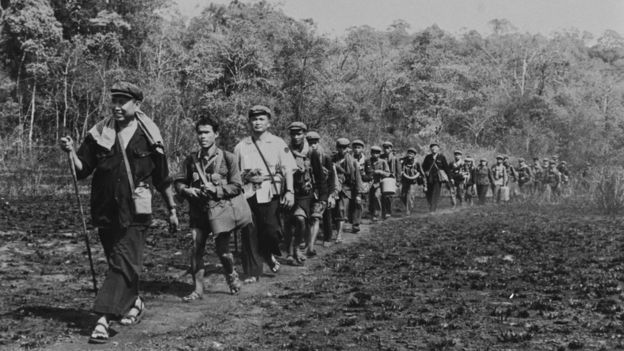
Khmers led by Pol Pot
Source: https://www.bbc.com/news/world-asia-pacific-10684399
Pol Pot led the black-clad and declared April 1975 as the New Year of Kampuchea or “Year Zero.” The Marxist ruler tried to take Cambodia back to the Middle Ages. Not only did he forced intellectuals to labor in communal farms but also murdered over ninety-nine percent of them when Khmer Rouge found out their former background. It was the worst mass killings in five years. The National Library was used to raise pigs, and Buddhist monasteries were ransacked and used to imprison Khmer people. Khmer Rouge put intense effort to wipe out all Khmer folklore.
Little did the world know that Cambodia owns rich heritage of culture and literature even prior to the war.
There were inscriptions on columns and walls that give hints of the Khmer empire’s royal lineages, religious conducts, conquests and victory of the kingdom.
Also, there were Buddhist texts written on stencils by Buddhist monks on palmyra palm leaves kept in monasteries. However, little of these texts survived the Khmer Rouge.
There were oral literature and popular legends sung from ancient origins about mythical heroes, heroines and ghosts. These oral-tradition legends handed down for centuries to teach values, and most of these folktales emphasize resolution of conflicts.
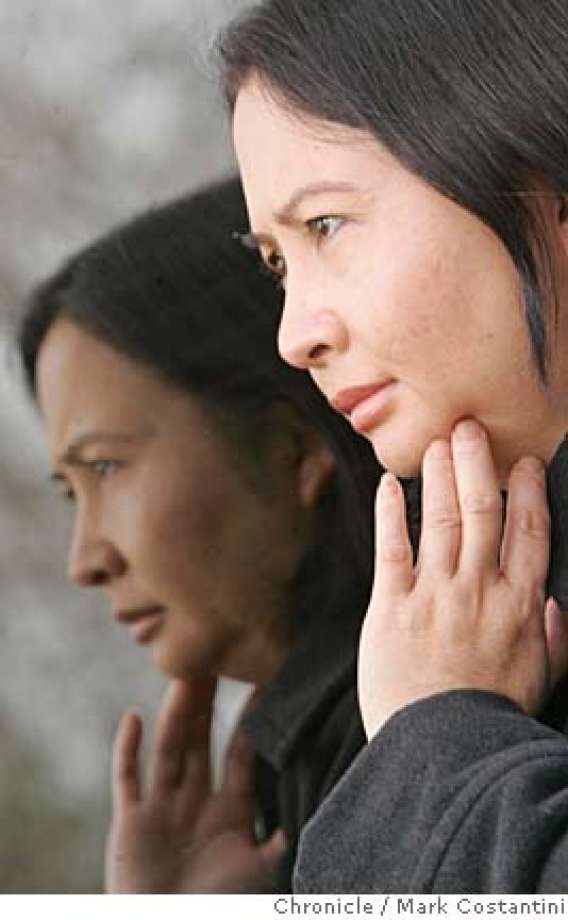
Vatey Seng author of The Price We Paid
Source: https://www.sfgate.com/bayarea/article/East-Bay-Memoir-aids-effort-to-help-Cambodia-2544128.php
The horror brought by Khmer Rouge may have paused the transmit of these legends but their values are still sung by the survivors nowadays. After five years of inhumane rule, Pol Pot got defeated and the establishment of People’s Republic of Kampuchuea finally brought about a reinstatement of the Cambodian writers’ prestige which renewed interest among the people of Khmer the traditions and their local folklore. Many regained their formal status and some were recognized globally– restating the horror in their history but with new hope that literature will never again be hindered to flourish. Many writers who survived exposed the scar in the heart of the nation through novels and poetry. Vatey Seng who wrote The Price We Paid and Navy Phim who wrote Reflections of A Khmer Soul stated accounts of their nightmare under Pol Pot’s regime to aid in the healing of the nation.
 LitLover